



Quick Answer
A stainless steel QR code is a durable QR code engraved or etched onto metal, designed for long-term use in outdoor, public, and high-traffic environments.
It is widely used for restaurant menus, retail displays, tourism signage, and industrial asset tracking, because it offers superior durability, a premium appearance, and reliable scan performance over time.
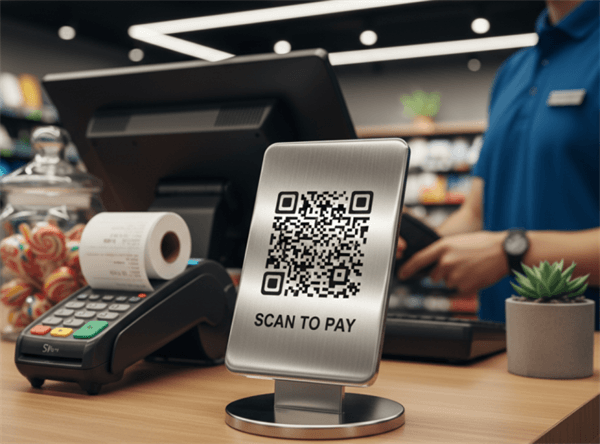
Why Stainless Steel QR Codes Are Replacing Traditional Labels
In many real-world applications, the QR code itself becomes the weakest link.
- ● Paper stickers peel
- ● Plastic labels fade under UV exposure
- ● Ink smudges in rain or humidity
The result: failed scans, poor user experience, and lost engagement
Stainless steel QR codes solve this by creating a permanent, high-quality bridge between physical objects and digital content.
Stainless Steel vs Printed QR Codes
To help you decide if metal is the right choice, here is a quick comparison:
| Feature | Stainless Steel QR Code | Standard Printed Label |
|---|---|---|
| Durability | Decades (weather, heat, chemical resistant) | Weeks to months |
| Appearance | Premium, professional | Basic |
| Security | Vandal-resistant | Easy to replace |
| Maintenance | None | Frequent replacement |
| Best Use | Branding, signage, assets | Temporary use |
Where Stainless Steel QR Codes Are Used (Beyond Industry)
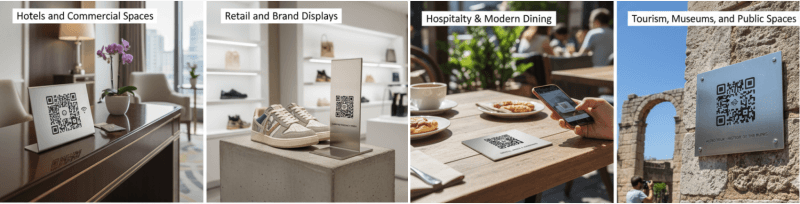
In reality, stainless steel QR codes are widely used in customer-facing environments:
1. Hospitality & Modern Dining
Modern restaurants are replacing paper stickers and plastic stands with sleek stainless steel QR code plates on tables.
- ● Use cases: Digital menus, contactless ordering, and Google review pages
- ● Benefit: Resistant to daily cleaning with harsh chemicals and stable for long-term use, even in outdoor dining areas
2. Retail and Brand Displays
Retail stores use custom QR code signs to create a more premium and interactive shopping experience.
- ● Use cases: Product information, brand storytelling, campaign landing pages
- ● Benefit: Enhances brand perception while allowing customers to access detailed content without staff assistance
3. Tourism, Museums, and Public Spaces
Tourism and cultural sites rely on durable QR codes to provide long-term visitor information.
- ● Use cases: Self-guided tours, historical content, audio guides
- ● Benefit: Weather-resistant and vandal-resistant, ensuring reliable access to information for years or even decades
4. Hotels and Commercial Spaces
Hotels and offices use QR codes to streamline guest and visitor interactions.
- ● Use cases: Wi-Fi access, service requests, check-in information
- ● Benefit: Provides a seamless, contactless experience while reducing printed materials
5. Industrial and Asset Tracking
In industrial environments, durability is critical for long-term identification.
- ● Use cases: Equipment tracking, maintenance logs, safety documentation
- ● Benefit: Withstands extreme conditions such as heat, chemicals, and outdoor exposure where traditional labels fail
What Should a Stainless Steel QR Code Contain? (Critical Insight)
This is the most misunderstood part.
A QR code should NOT contain all your data.
Instead, it should contain:
Why URL-Based QR Codes Are Best
- ✓ Content can be updated anytime
- ✓ No need to replace the metal tag
- ✓ Supports images, menus, databases
- ✓ Enables tracking and analytics
Examples of What to Link To
How to Create a QR Code for Stainless Steel Tags
1 Step 1: Generate a Clean QR Code
Before engraving your QR code on stainless steel, you need a clean, scannable, and optimized code.
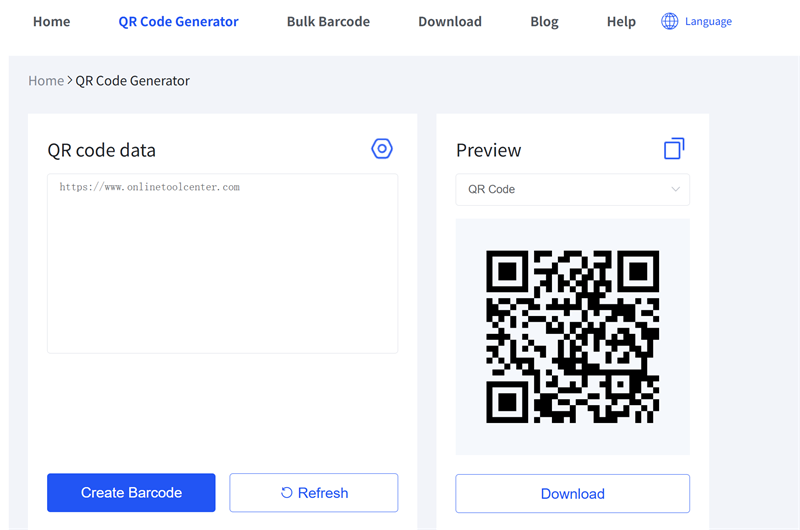
Use a professional tool like an easy-to-use online qr code generator to create a clean and reliable code in seconds.
- ● URL (recommended)
- ● Avoid excessive data

2 Step 2: Optimize for Metal Use
- ● Keep pattern simple
- ● Avoid overly dense QR codes
- ● Use standard black/white design
3 Step 3: Export in Vector Format
Use:
Required for precise engraving.
4 Step 4: Test Before Production
- ● Scan with multiple devices
- ● Test under different lighting
- ● Check distance scanning
5 Step 5: Produce the Metal Tag
Choose:
- ● Laser engraving: (durability)
- ● Annealing: (better aesthetics)
How to Ensure Your Stainless Steel QR Code Is Always Scannable
1. Choose the Right Material and Finish
- ■ 304 Stainless Steel: Suitable for indoor, retail, and restaurant environments
- ■ 316 Stainless Steel: Best for marine, outdoor, or chemical-heavy environments
- ■ Laser Engraving: Deep and highly durable
- ■ Laser Annealing: Smooth surface with high contrast, ideal for branding
2. Follow Key Design Rules for Scannability
-
■
Use high contrast
Dark marking on a lighter surface improves recognition -
■
Avoid mirror-polished finishes
Use brushed or matte surfaces to reduce glare -
■
Maintain a quiet zone
Leave space around the QR code -
■
Choose the right size
Minimum 2–3 cm, larger for complex codes -
■
Use error correction
Improves readability even if damaged
3. Common Mistakes to Avoid
- ✕ Using overly dense QR codes
- ✕ Making the code too small
- ✕ Low contrast between code and surface
- ✕ Using reflective materials
- ✕ Skipping real-world testing
These issues are the most common reasons custom metal QR codes fail in practice.
Bottom Line
A stainless steel QR code is not just a durable label—it is a long-term digital access point embedded in the physical world.
Businesses use it not only for durability, but for:
- ✨ Branding
- ✨ Customer interaction
- ✨ Public information
- ✨ Seamless offline-to-online experience
To get the best results, focus on two things:
1. A well-designed QR code (digital foundation)
2. A durable physical medium (metal tag)
Start by creating your QR code with a reliable generator, then ensure it is optimized for real-world use.
FAQ
Can stainless steel QR codes be scanned easily?
Yes, if they have high contrast, proper size, and minimal glare.
Are they good for restaurants?
Yes. They are widely used for menus and review links because they are durable and easy to clean.
Should I use static or dynamic QR codes?
Dynamic (URL-based) QR codes are better because you can update content without replacing the metal tag.
How long do stainless steel QR codes last?
Typically 10–20+ years depending on environment and engraving quality.
What is the biggest mistake when using metal QR codes?
Using a poorly optimized QR code (too dense, too small, or low contrast), which leads to scanning failure.
